Japanese New Year | Oshōgatsu
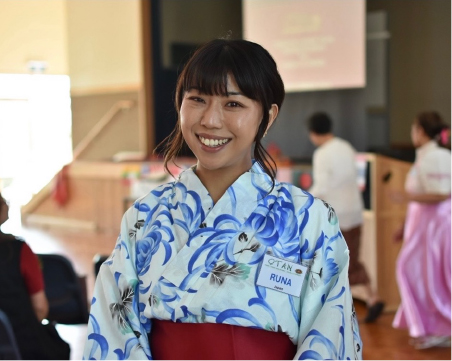
Since the adoption of the Gregorian calendar in 1873, January 1st has been celebrated as the official Japanese New Year and is considered the most important annual holiday in the country. There are many traditions and rituals associated with Oshōgatsu (Japanese New Year). While these customs hold strong cultural significance, they can often be hard to observe when outside the country of origin. eCALD speaks with Runa Saito, a Senior Practitioner at Oranga Tamariki. Runa migrated from Japan as a child with her family to New Zealand and she shares her views about culture and Oshōgatsu.
Culture is a meta concept that encompasses many aspects of society and human life. To Runa, culture refers to learnt behaviours and ways of being that shape individual’s beliefs and perceptions. While Runa calls Aotearoa New Zealand her home; as someone of Japanese heritage, she has learnt to live in the duality of both the Japanese culture and the culture here in Aotearoa. While many traditions and customs associated with Oshōgatsu cannot be followed here due to environmental and societal constraints, Runa reminisces fondly some of the customs she observed as a young child in Japan.
 In Japan, preparations start with Osouji or ‘the big clean’ where houses get a deep clean on the days leading up to New Year’s Eve and is followed by decorating the homes with O-Shōgatsu Kazari, (traditional Japanese New Year decorations) to welcome toshigami, the New Year deity and receive his blessings. Each component of O-Shōgatsu Kazari has a meaning associated with longevity, good health, resilience, good fortune, and purity. Runa states, traditionally the days leading up to Oshōgatsu is also the time where (typically) females prepare a series of specific foods with deep cultural associations. Osechi, similar to bento boxes, are often prepared in 2-3 layers of stackable boxes containing dishes of various symbolic significance, e.g. ebi (shrimp) symbolising longevity and datemaki (sweet rolled omelet) symbolising academic success. The contents may vary from region to region, and not all regions have the custom of eating osechi for New Year.
While mochi is a year-round treat, it is centuries old with deep associations with good fortune and prosperity; and plays an important role during Oshōgatsu. Communal mochi making, offering kagami mochi (two round-stacked mochi cakes) to deities, and eating mochi on its own or in various dishes are all important Oshōgatsu traditions. While the traditions of making osechi or mochi at home may not be as common even in Japan due to time constraints and the modern phase of life, people still participate in these traditions by ordering from stores. It is also tradition to eat toshikoshi soba or New Year soba before midnight on New Year’s Eve. The thin buckwheat noodles symbolise longevity, resilience and a fresh start. Runa shared that her family used to follow this tradition on the 31st of December in their first years in New Zealand, but it gradually faded away as it felt unusual to have a bowl of hot noodle soup during summer. She reflected about reviving that tradition again this year but with a bowl of cold soba instead. She shared that she hardly fails to eat mochi for New Year’s, however!
One important tradition that cannot be recreated in New Zealand is the visiting of shrines on the 1st of January. Japanese New Year practices are firmly grounded in Shintoism, the indigenous belief system of Japan; and it is tradition to visit shrines of important significance associated with specific deities and/or ancestors to reflect on the past year, reconnect with ancestors, and pray for a good year ahead. Runa recalled visiting the family shrines as a child but has not been able to do since moving to New Zealand. She also recalled playing hanetsuki (Japanese badminton) and karuta (a card game), two of several traditional games played during Oshōgatsu. The popularity of these games has however decreased in Japan in recent times.
The traditions associated with Oshōgatsu, while passed down generations, have also evolved over time, adapting to the changing environments and needs. Runa’s own personal story is an example of acculturation – keeping a bit of the original culture while adapting to the new, i.e. existing in duality. This is culture – complex and dynamic.
謹賀新年 - Kinga shinnen – Happy New Year!
Dulani Abeysinghe, eCALD Educator, Health New Zealand | Te Whatu Ora