Honouring Ramadan | In a Peaceful Land
As the holy month of Ramadan approaches, communities around the world prepare for a period of deep reflection, compassion, and connection. For Muslims, Ramadan is a time to slow down, look inward, and strengthen spiritual well‑being through fasting, prayer, and acts of kindness. It is also a time that brings families, friends, and neighbours together—whether through shared meals at sunset, quiet moments of worship, or simple gestures of generosity.
Somalia, located in the Horn of Africa, is an old civilisation that played a central role in the old Silk Routes connecting merchants from kingdoms and empires across the ancient world. The late 1800s saw the occupation of Somalia by Italy, France and Britain. Somalia Italiana gained independence in 1960 to become Somalia or the Federal Republic of Somalia while French Somaliland became Republic of Djibouti after independence in 1977. British Somaliland is now the partially recognised state of Republic of Somaliland, and another region in the North occupied by Britain became part of Kenya.
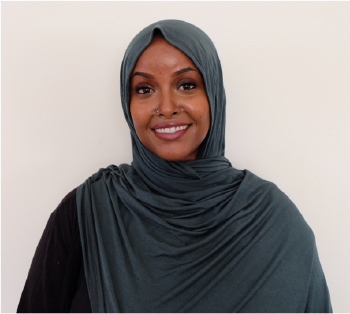 Civil unrest that started in 1978 turned into Civil War in 1990 forcing large numbers to flee their homeland. Fahima Muse was only a little child when she along with her parents, grandmother, and two siblings had to leave their ancient land in search of safety. Arriving in the shores of New Zealand as a quota refugee at the age of four, she is now a registered occupational therapist with close to a decade of experience working in the New Zealand public and private health care sector. Fahima identifies herself as a Somali New Zealander of Muslim faith who is immensely proud of her Somali cultural heritage and equally dedicated to the country she grew up in, New Zealand. Fahima says the exposure she had at home to the language, food, and religion as well as the opportunity to visit Somalia again later in life helped with keeping her cultural roots.
Ramadan is a very special time for those of Muslim faith as Sawm (fasting during the month of Ramadan) is one of the Five Pillars of Islam (or mandatory obligations). The month of Ramadan starts with the sighting of the crescent moon on the 9th month of the Islamic calendar. It involves refraining from consuming any food or drinks from sunrise to sunset until the sighting of the new crescent moon, usually after 29-30 days. This year, the month of Ramadan starts around the 17th to the 19th of February and will conclude with Eid al-Fitr around the 20th-21st of March. When asked what Ramadan meant to Fahima, she stated that for her it is more time spending with family and getting closer to God and her faith through prayers and reflection. Fahima says during fasting one needs to exercise discipline around emotions, thoughts, actions, desires, and words. She likens the month of Ramadan to a period of ‘spiritual detox’ and a time to ‘reset’. Fahima says the iftar meal to break the fast at sunset is typically not meant to be a big heavy meal as one of the purposes of fasting is to ‘purify your soul’ and to consider those less privileged. With a laugh, she adds that she does love having the odd samboosa (the Somali version of samosa)!
Older people, young children, females who are pregnant or breastfeeding, and those who are unwell or have other reasons with good cause are exempted from fasting during the month of Ramadan. One is also not to fast during their menstrual period. Fahima says these ‘missed days’ can be made up later or females can spend more time in acts of worship such as prayers, gaining more religious knowledge, and spiritual reflection. Fahima acknowledges some people even when exempt may be unwilling or resistant to refrain from fasting, having had to navigate many conversations with patients as well as family members. She says all one can do is to educate as much as possible, and to monitor regularly if they are still unwilling to break their fast. Fahima said Ramadan is a spiritual journey and a way of life; and for some, nothing will hold them back from this - especially in this free land, Aotearoa New Zealand.
Dulani Abeysinghe, eCALD® Educator, Health New Zealand | Te Whatu Ora