Christmas Cheer | “Christmassy” Philippines
Christmas isn’t just a holiday in the Philippines—it’s the biggest and most anticipated celebration of the year! Known for its warmth and vibrancy, the Filipino Christmas season blends centuries of traditions: pre-colonial customs, Spanish and American influences, deep-rooted religious practices, and modern-day festivities. You’ll even find cultural echoes from Latin America and Africa woven into the celebrations.
If you think seeing Christmas trees up in November is early, think again! In the Philippines the festive season starts on the 1st of September with decorations going up and people starting to shop and prepare for the big day. Christmas formally starts on the 16th of December when the first of nine pre-dawn masses is held with the last one held on Christmas day. The Fest of the Three Kings celebrations on the first Sunday of January concludes the festivities.
As well as attending church, Christmas is a communal time to be spent with family and friends over food and good cheer. Noche Buena, (translated as ‘Good Night’) is the Christmas Eve midnight celebration where family and friends gather to have a midnight feast following Christmas Eve mass. In the Philippines, common dishes that are featured are Lechón (roast pig), ham, spaghetti, lumpia (spring rolls), creamy salads, fruit salads, leche flan, and sweet rice cakes. Bibingka, a glutinous rice cake cooked in banana leaf and topped with grated coconut is a classic during Christmas. There are different variations of bibingka.
If you want to add something different to your Christmas meal this year, here is a recipe for bibingkang malagkit provided to eCALD by Julita Navera (Retired Theatre Nurse, Te Whatu Ora - Waitematā)
Bibingkang Malagkit
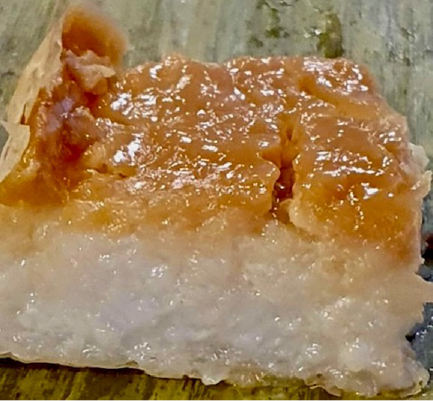
Ingredients:
Sticky coconut rice
- 2 cups glutinous rice, washed & drained
- 2 cans of coconut milk
- ½ cup white sugar
- Salt (to taste)
Coconut caramel topping
- 1 can coconut cream
- 1 cup brown sugar
- •Salt (to taste)
Method:
- Line a 5x8 inch (12cmx20cm) baking tray with parchment paper or banana leaves.
- Combine glutinous rice and coconut milk in a large pot and bring it to the boil.
- Gently let the mixture simmer over low heat stirring occasionally to prevent the rice from burning.
- Once the coconut milk is almost all absorbed, add the sugar and a pinch of salt. Continue stirring until the rice is thick and sticky.
- Remove from heat and spread the rice evenly in the baking tray.
- Preheat oven to 180c.
- Combine all the ingredients for the topping in a saucepan and bring to a boil before lowering the heat to a gentle simmer. Stir constantly until the mixture turns dark and syrup like.
- Pour the topping onto the rice and spread evenly.
- Bake for 30-40 minutes until the topping is caramelised and bubbly.
- Remove from oven and cool completely before slicing.